
Exam Tips & Revision
This page is designed to give helpful hints and tips to make revision easier for you.
You can use the links below to skip to the section you want, or just to see what’s there!
We have also put together a slideshow, which you can find here, to give some help and guidance for you all.
Exams and tests can be a stressful time for most students, but follow these fantastic stress-free tips for revising... and you might find you will pleasantly surprise yourself!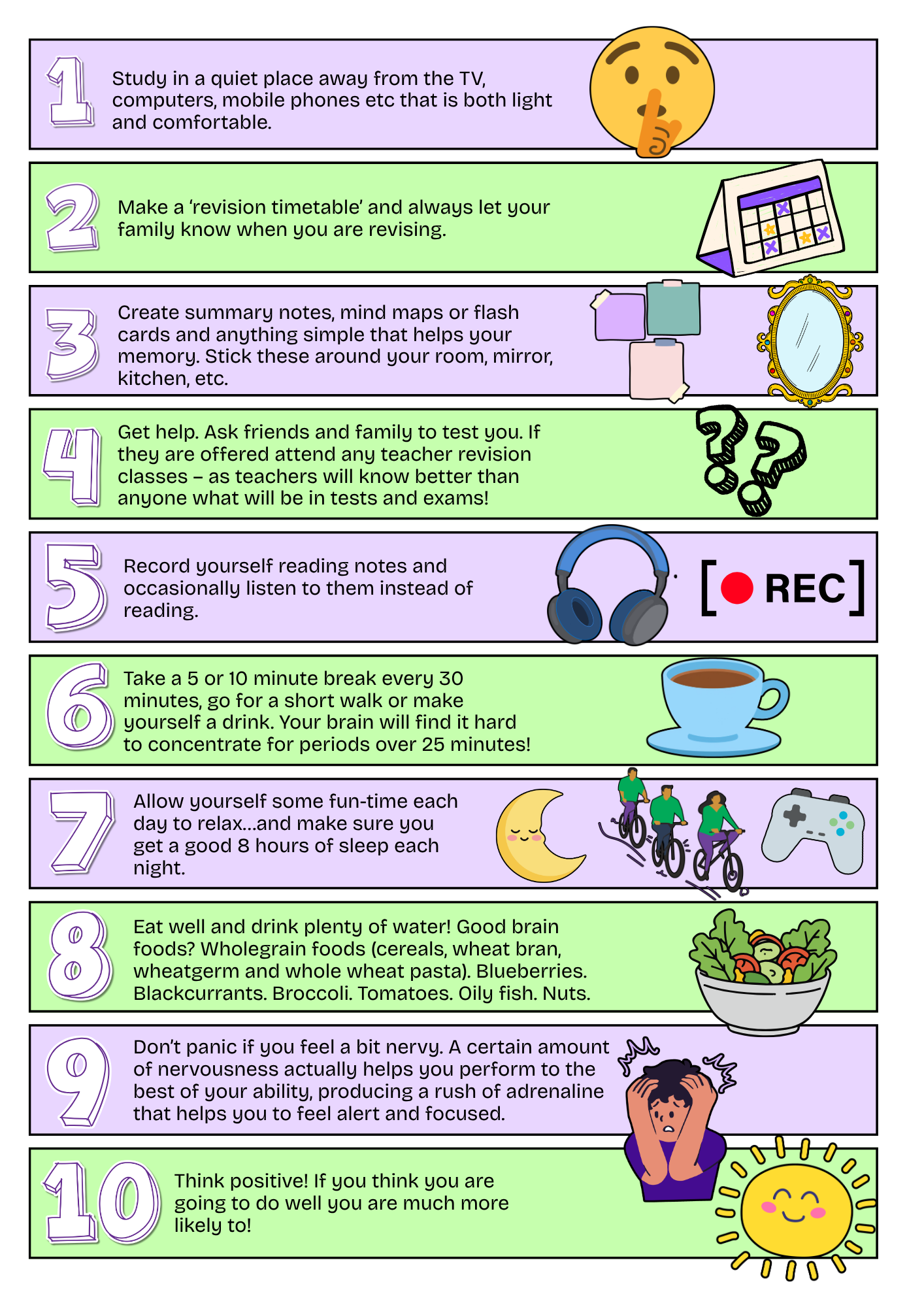
Section A: Know your skills
What
The key to answering the dance paper (especially section A, is to know what goes where). You need to learn what is categorised under each heading. Section A – 30/80 marks – 25 Mins
Questions 1 – 7 are – ‘Made up’ choreography – you need to think quickly and know your choreography skills (see AQA Dance Specification)
Questions 8 – 13 – Performing skills and safe execution knowledge – you need to know the skills, how to improve them and why they are important (see AQA Dance Specification)
Performance and Choreography Skill Testing Challenge!
Get an adult to test your dance knowledge! Use your skills organiser to see how much you really know. Can you categorize each skill? Challenge yourself—can you do it in under 5 minutes?
Why Skills Matter!
Read about the importance of each skill. Why do they matter in dance? Afterward, do a brain dump! Grab a piece of paper and jot down everything you remember. Think of it like a dance move for your brain!
Hypothetical Dance Party!
Now, let’s choreograph some fun! Pick a theme (like a carnival, underwater adventure, or space odyssey) and plan your dance.
- Intention: What message do you want to convey?
- Motifs: What cool moves will repeat?
- Developments: How will your dance evolve?
- Structure: What’s the beginning, middle, and end?
- Relationships: How do dancers interact?
- Devices: What unique techniques will you use?
- Aural Settings: What music or sounds will set the mood?
section b: Say WHY Your Skills are Important
What
Talking about your own work. Three questions:
- Questions relate to your work in both performance and choreography
- The command word is explain
- Each question is worth 6 marks
- The questions are all of equal value
The key to answering these questions is to know where things are categorised, using PEE and keeping to time. Eight minutes per question.
Watch and Reflect!
Check out the videos of your performances and choreography so far. Time for a reflection party!
Skill Breakdown
Plan your answers about for your set phrases and performance in duet/trio:
For each think – What skills did you need (point)? Describe a moment that needed the skill (evidence)? Explain why that skill made your performance effective?
- Physical Skills: What was challenging?
- Technical Skills: How did you execute your phrases?
- Mental Skills: What mindset helped you perform?
- Expressive Skills: How did you show the artistry of the performance?
Choreography Analysis
Dive deep into your dances! Think about the content you used, a description of the moment and how they showed your choreographic intent. Plan answers about:
- Actions: What specific movements did you use?
- Dynamics: How did you vary the energy?
- Space: How did you use the performance area?
- Structure: What made your dance cohesive?
- Process: What was your creation journey?
- Devices: Any cool tricks or techniques?
- Aural Setting: How did music influence your piece?
SECTION C: GIVE YOUR OWN INTERPRETATIONS AND EVALUATIONS
What
The GCSE Dance Anthology provides the focus for learning how to critically appreciate professional set works. The anthology contains the following professional set works:
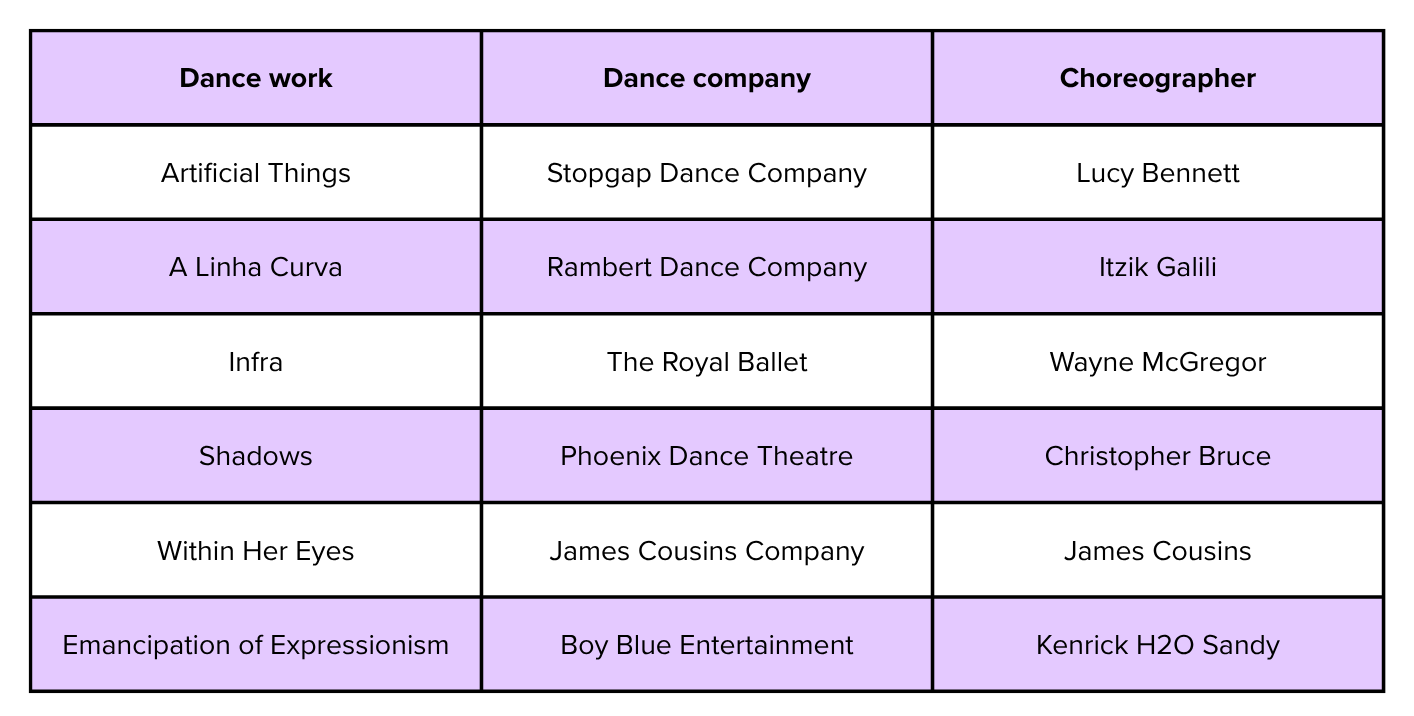
You must study all six works in their entirety and be prepared to describe, analyse, interpret, evaluate and reflect on the works in response to short answer and extended writing questions.
Professional Dance Watch Party!
Make it a routine to watch all professional works regularly! Take notes on movement and production—what catches your eye?
Personal Thoughts
Write down your impressions!
- Interpretations: “I think this could show…”
- Evaluations: “This creates an impact on the audience because…”
Revision Guide Challenge!
Grab your revision guides and do a brain dump! Write everything you can remember about each professional dance—don’t hold back! Mini-whiteboards and pens are great for this.
Comparison Planning
Plan how you’ll compare different works. What are the similarities and differences in style, themes, and techniques?